|
Yifei Cao曹逸飞 I'm a researcher at the intersection of cognitive science, neuroscience, artificial intelligence, and robotics. My dream is to uncover the computations the human brain uses to learn, reason, and decide — and to use them to build better, more human-like AI. 我是一名工作在认知科学、神经科学、人工智能与机器人交叉领域的研究者。我的梦想是揭示人脑用于学习、推理与决策的计算原理,并以此启发出更好、更接近人类的人工智能。 I'm a PhD student in Psychology at UCLA, advised by Erie Boorman and Hongjing Lu, and I collaborate with Maria Eckstein at Google DeepMind and Xiaoyan Wu. Before UCLA, I earned my MSc in Interdisciplinary Brain Sciences from ETH Zurich and the University of Zurich, working with Valerio Mante, Philippe Tobler, and Silvia Brem. 我目前是加州大学洛杉矶分校(UCLA)心理学系的博士生,导师为 Erie Boorman 与 Hongjing Lu,并与 Google DeepMind 的 Maria Eckstein 以及 Xiaoyan Wu 合作。在此之前,我于苏黎世联邦理工学院(ETH Zurich)与苏黎世大学获得跨学科脑科学硕士学位,师从 Valerio Mante、Philippe Tobler 与 Silvia Brem。 If you're a student who shares these interests, I'd love to hear from you. 如果你也对这些方向感兴趣,欢迎随时与我联系。 |

|





News最新动态
Ongoing Academic Projects在研学术项目
Erie Boorman UCLA加州大学洛杉矶分校 
Hongjing Lu UCLA加州大学洛杉矶分校
Human Cognitive Map人类认知地图
I study how cognitive maps form in the human brain and how their neural representations change with learning. Previous work shows that 2-D, map-like representations can emerge in regions such as the entorhinal cortex and hippocampus, while the prefrontal cortex tends to compress them into 1-D. In my PhD I combine behavioral experiments, fMRI, EEG, computational models, and RNNs to ask how neural geometry changes during learning, what drives the hippocampus and PFC toward different representations, and how these representations support flexible inference and generalization. 我研究人类认知地图如何在大脑中形成,以及其神经表征如何随学习而变化。已有研究表明,内嗅皮层与海马等脑区可以学到二维的、类地图的表征,而前额叶皮层则倾向于将其压缩为一维。博士期间,我结合行为实验、fMRI、EEG、计算模型与 RNN,探究学习过程中神经几何如何变化、是什么驱动海马与前额叶形成不同的表征,以及这些表征如何支持灵活的推理与泛化。 
Jian-Qiao Zhu祝建桥 University of Hong Kong香港大学 
Hanbo Xie谢涵博 Georgia Tech佐治亚理工学院
AlphaCognition: Understanding Human Intelligence with a Comprehensive Behavioral Dataset and Artificial Neural NetworksAlphaCognition:用大规模行为数据集与人工神经网络理解人类智能
LLMs like Centaur show remarkable performance in modeling human behavior, but their heavy data requirements make them hard to fine-tune for predicting and explaining behavior — and they may take shortcuts that capture choice preferences rather than the underlying task structure. To address this, we train a Transformer on the large-scale behavioral dataset from Poldrack Lab's 2019 Nature Communications paper, in which hundreds of participants completed a comprehensive battery of cognitive tasks. We believe a dataset this comprehensive opens the door to a model that captures the structure of human intelligence. 像 Centaur 这样的大语言模型在刻画人类行为上表现惊人,但庞大的数据需求让它们难以微调来预测和解释行为,而且可能走捷径,只捕捉选择偏好而非任务的内在结构。为此,我们基于 Poldrack 实验室 2019 年 Nature Communications 论文的大规模行为数据集训练一个 Transformer——该数据集包含数百名被试完成的一整套综合认知任务。我们相信,如此全面的数据集让我们有可能构建出真正捕捉人类智能结构的模型。 
Xiaoyan Wu吴小燕 Zurich Psychiatric Hospital苏黎世大学精神病医院
Neural Mechanisms Underlying Human Altruistic Motivation人类利他动机的神经机制
Wu et al. (2024) show that human altruistic behavior is driven by a combination of seven socioeconomic motives — a "motive cocktail." With Xiaoyan, I use EEG and MEG recorded while participants perform the same task to decode the temporal and neural dynamics supporting each type of motive. Wu 等人(2024)发现,人类的利他行为由七种社会经济动机的组合所驱动,称为"动机鸡尾酒"。我与吴小燕合作,利用被试执行同一任务时记录的 EEG 与 MEG,解码支持每一种动机的时间与神经动态。 Industry Collaborations业界合作
Maria Eckstein Google DeepMind
Hybrid Neural-Cognitive Models for Reversal Learning用于反转学习的神经-认知混合模型
Artificial neural networks predict human behavior far better than classical cognitive models, but their many parameters make the underlying algorithms hard to interpret. Using HybridRNN — a framework from DeepMind — we combine the accuracy of ANNs with the interpretability of cognitive models to study human learning. With Maria, I apply HybridRNN to the computations behind flexible adaptation in reversal learning, and use dynamical-systems analysis to understand its internal representations. 相比经典认知模型,人工神经网络能更准确地预测人类行为,但其庞大的参数量让背后的算法难以解释。借助 DeepMind 提出的 HybridRNN 框架,我们把神经网络的精度与认知模型的可解释性结合起来研究人类学习。我与 Maria 合作,用 HybridRNN 刻画反转学习中灵活适应背后的计算过程,并通过动力系统分析理解其内部表征。 
EBKernel Lab Research Intern研究实习
Neural Cognitive Visual Language Navigation (NC-VLN)神经认知视觉语言导航(NC-VLN)
At EBKernel, I work on a next-generation vision-language navigation (VLN) system grounded in findings about human cognitive maps. Building on the Tolman-Eichenbaum Machine and Vector-HaSH models, the entorhinal-hippocampal circuit offers an effective framework — a predefined spatial grid backbone plus efficient item-space binding — that lets humans generalize spatial and non-spatial knowledge across environments. Our goal is a brain-inspired VLN system with strong flexibility and generalization. 在 EBKernel,我致力于一套以人类认知地图研究为基础的新一代视觉语言导航(VLN)系统。基于 Tolman-Eichenbaum Machine 与 Vector-HaSH 模型,内嗅-海马环路提供了一个高效框架——预设的空间网格骨架加上高效的"物体-空间"绑定学习——使人类能够在不同环境中泛化空间与非空间知识。我们的目标是打造一个灵活、可泛化的脑启发 VLN 系统。 Brain Inspired AI and Robotics Demos脑启发的人工智能与机器人 DemoCognitive Inspired Vision Language Navigation认知启发的视觉语言导航 A brain-inspired vision-language navigation agent that builds cognitive-map-like spatial representations to navigate novel environments.一个脑启发的视觉语言导航智能体,通过构建类认知地图的空间表征,在陌生环境中自主导航。 Athlete2RobotAthlete2Robot(运动员到机器人) Transferring human athletic motion to a humanoid robot through motion imitation.通过动作模仿,将人类的运动技能迁移到人形机器人上。 Important Collaborators重要合作者Research研究成果I'm interested in the neural and computational processes underlying human learning and decision-making. Selected publications and research tools are listed below. 我关注人类学习与决策背后的神经与计算机制。以下是部分论文与研究工具。 |


|
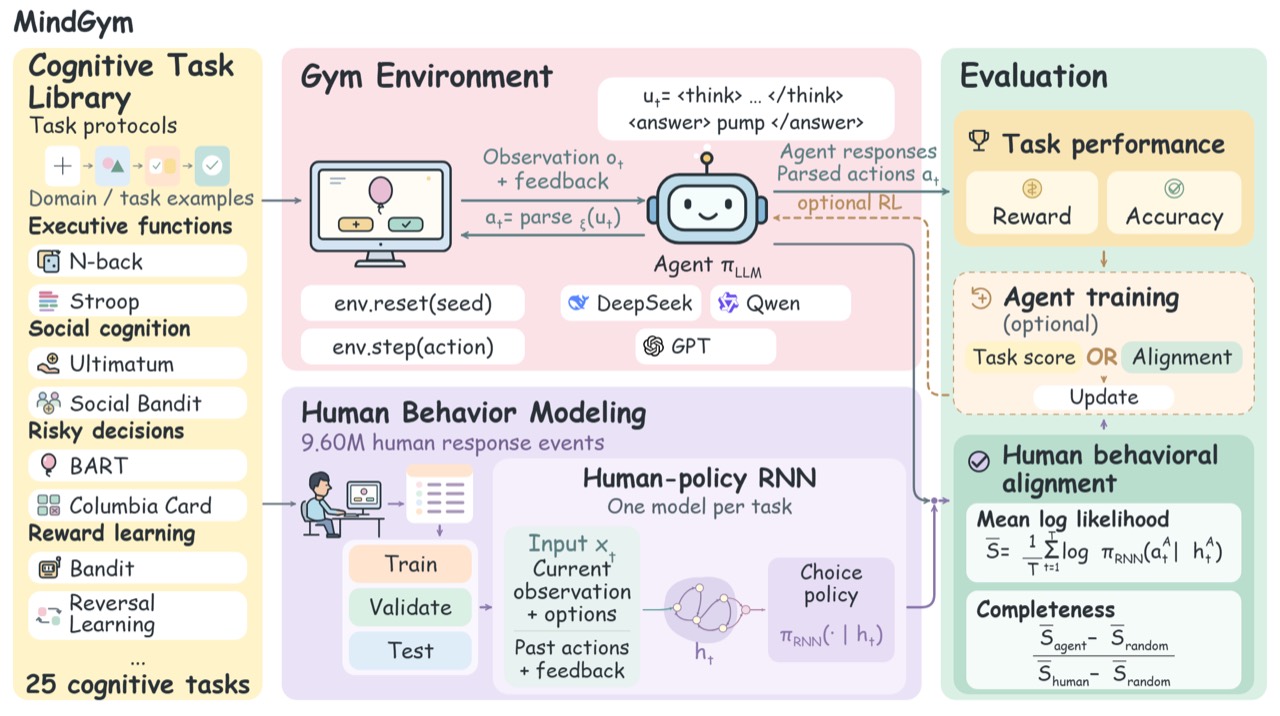
MindGym: A Cognitive Task Library for AI Agents
Research platform, 2026 project website项目网站 / overview diagram项目示意图 MindGym turns cognitive psychology and behavioral economics experiments into interactive environments for AI agents. It compares task performance with human behavior and explores how agent architecture and memory shape decisions.MindGym 将认知心理学与行为经济学实验转化为 AI 智能体可交互的任务环境,比较任务表现与人类行为,并研究智能体架构和记忆如何影响决策。 |
|
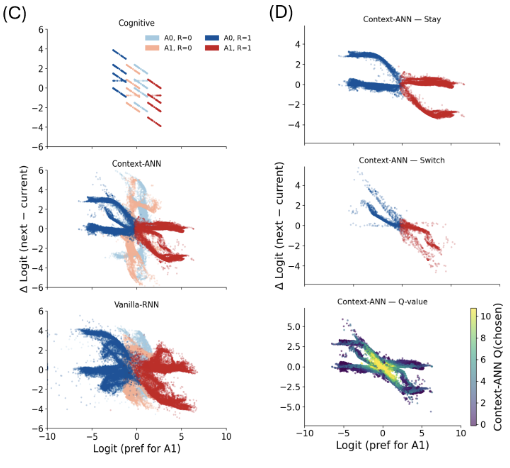
Interpretable Hybrid Neural-Cognitive Models Discover Cognitive Strategies Underlying Flexible Reversal Learning
Chonghao Cai, Liyuan Li, Yifei Cao, Maria Eckstein Oral Presentation at Neurips 2025 Coginterp Workshop, 2025 supplement / bibtex Hybrid cognitive–neural network modeling reveals a context-dependent value-updating function in human flexible learning.认知与神经网络的混合建模揭示了人类灵活学习中存在依赖情境的价值更新机制。 |
|
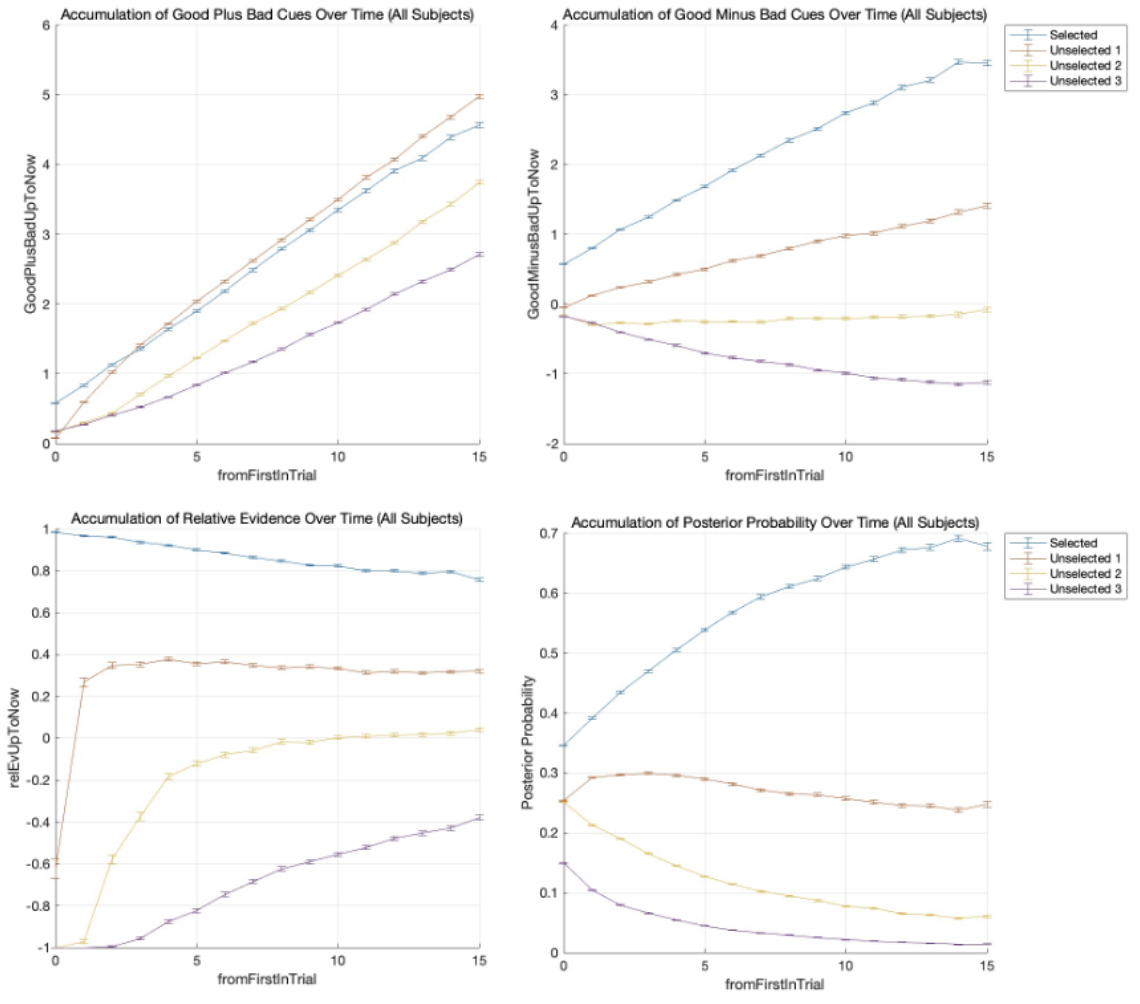
Computations Underlying Human Active Evidence Sampling and Decision Making
Yifei Cao, Victoria Shavina, Valerio Mante Master Thesis, 2025 bibtex / "smoothing" code We characterized the computations underlying how people actively sample evidence and make decisions.我们刻画了人类主动采样证据并做出决策背后的计算过程。 |
|
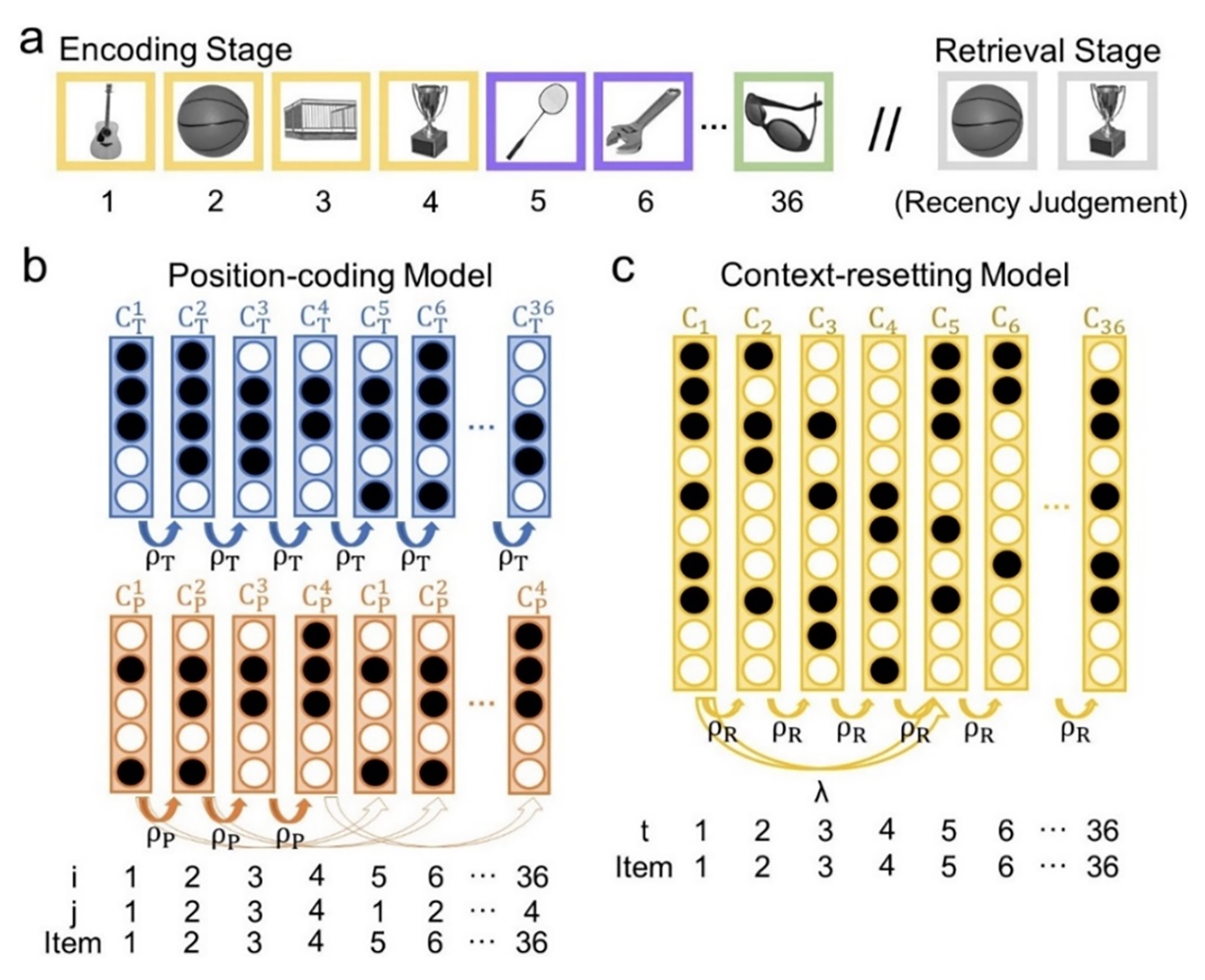
A position coding model that accounts for the effects of event boundaries on temporal order memory
Xiaojing Peng, Yifei Cao, Jintao Sheng, Yu Zhou, Huinan Hu, Gui Xue Cognitive Psychology, 2025 bibtex / "smoothing" code We modeled human temporal-order memory with computational models.我们用计算模型刻画了人类的时间顺序记忆。 |
|
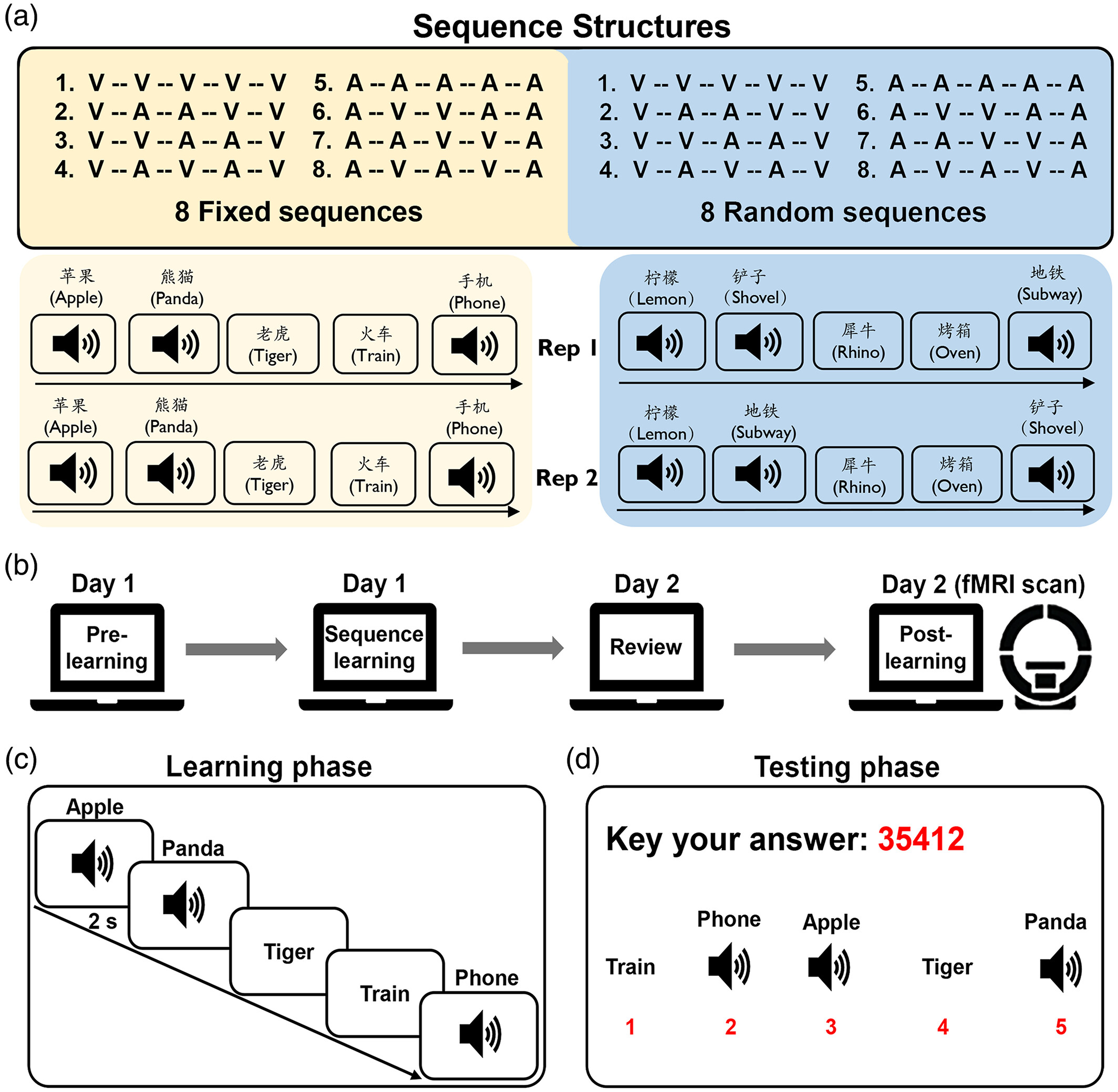
The neural representations underlying asymmetric cross-modal prediction of words
Liang Shi, Chuqi Liu, Xiaojing Peng, Yifei Cao, Daniel A. Levy, Gui Xue Human Brain Mapping, 2023 bibtex / "smoothing" code We investigated how sequence memory is represented in the human brain.我们研究了序列记忆在大脑中的表征方式。 |
|
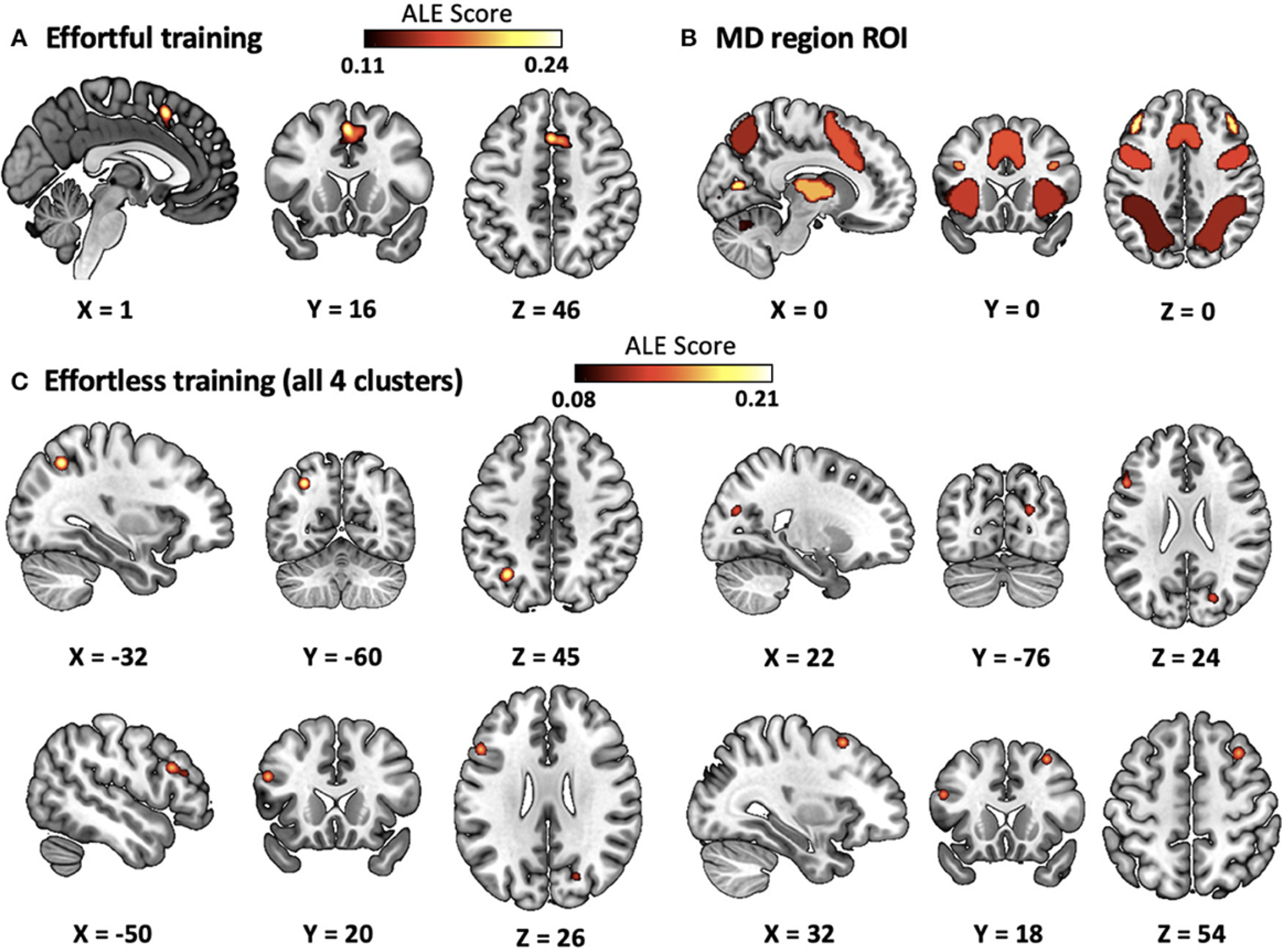
Effortful and effortless training of executive functions improve brain multiple demand system activities differently: an activation likelihood estimation meta-analysis of functional neuroimaging studies
Chan Tang, Ting Huang, Jipeng Huang, Nuo Xu, Yuan Wang, Yifei Cao Frontiers in Neuroscience, 2023 bibtex / "smoothing" code Using ALE meta-analysis across more than 50 fMRI studies, we showed that effortful and effortless training affect the brain's multiple-demand system differently.通过对 50 多项 fMRI 研究的 ALE 元分析,我们发现费力与不费力的训练对大脑"多需求系统"的影响存在差异。 |
|
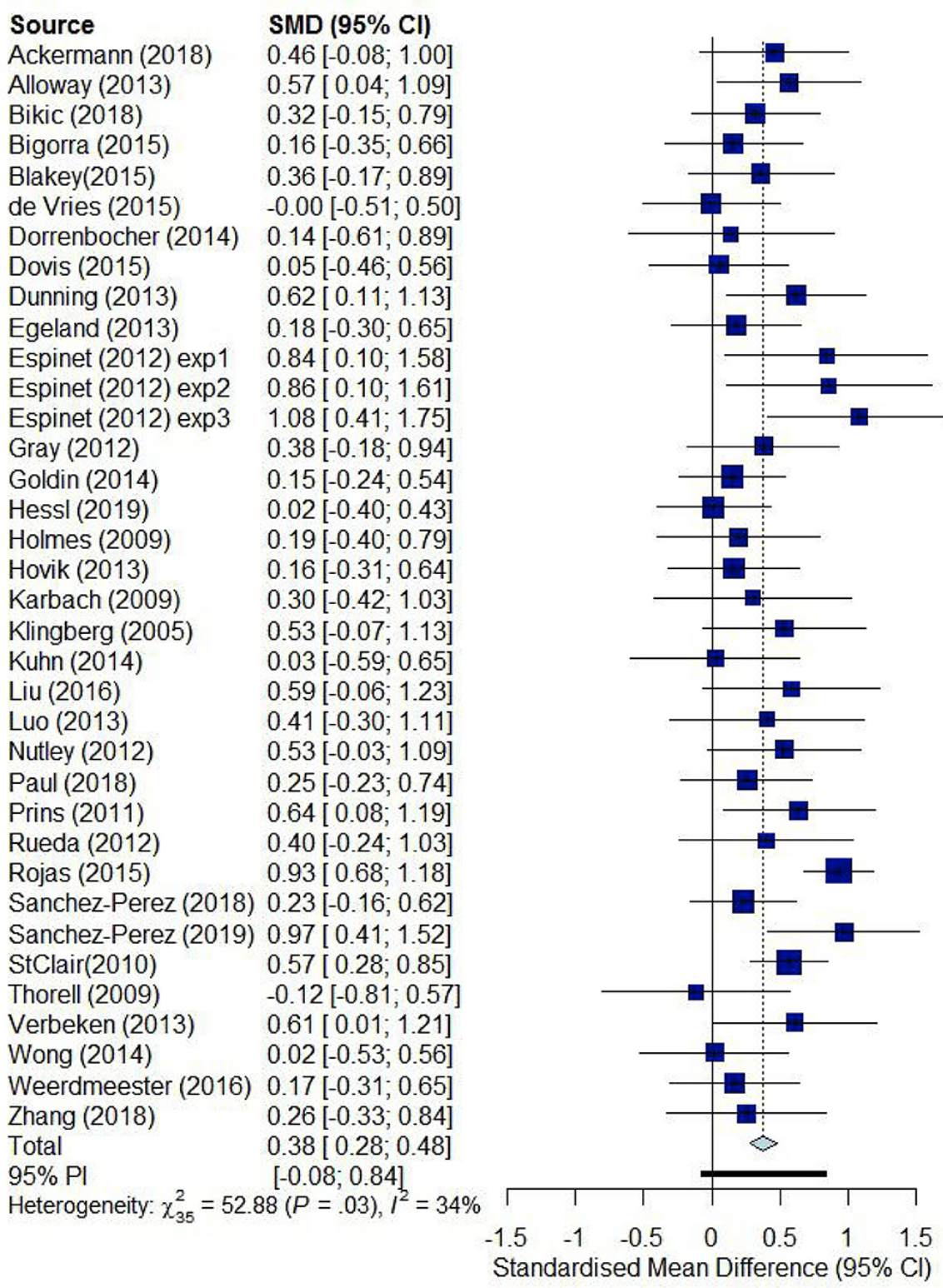
Effects and moderators of computer-based training on children's executive functions: a systematic review and meta-analysis
Yifei Cao, Ting Huang, Jipeng Huang, Xiaochun Xie, Yuan Wang Frontiers in Psychology, 2020 bibtex / "smoothing" code We examined whether adding game elements to cognitive training improves its effect on children's executive functions.我们考察了在认知训练中加入游戏化元素,是否能增强其对儿童执行功能的干预效果。 |